Synopsis
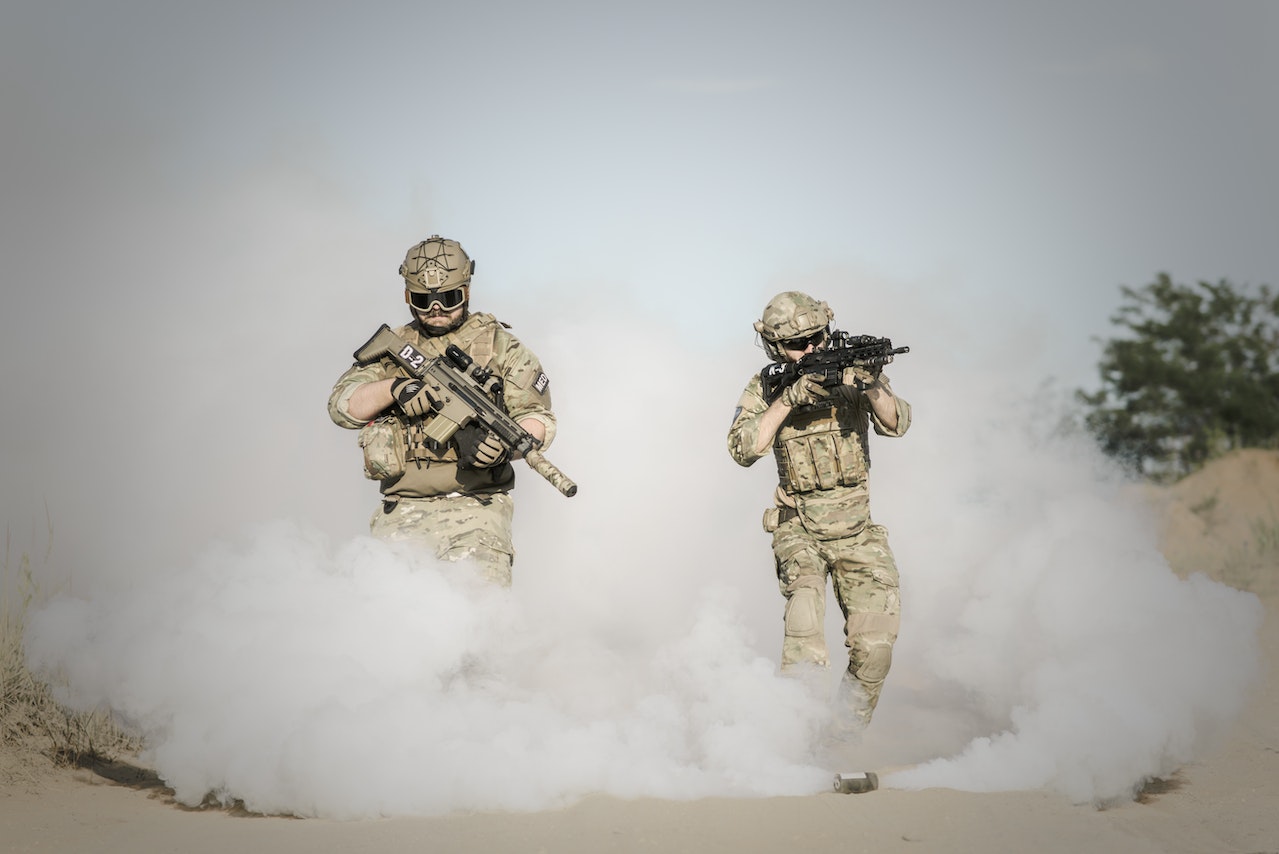
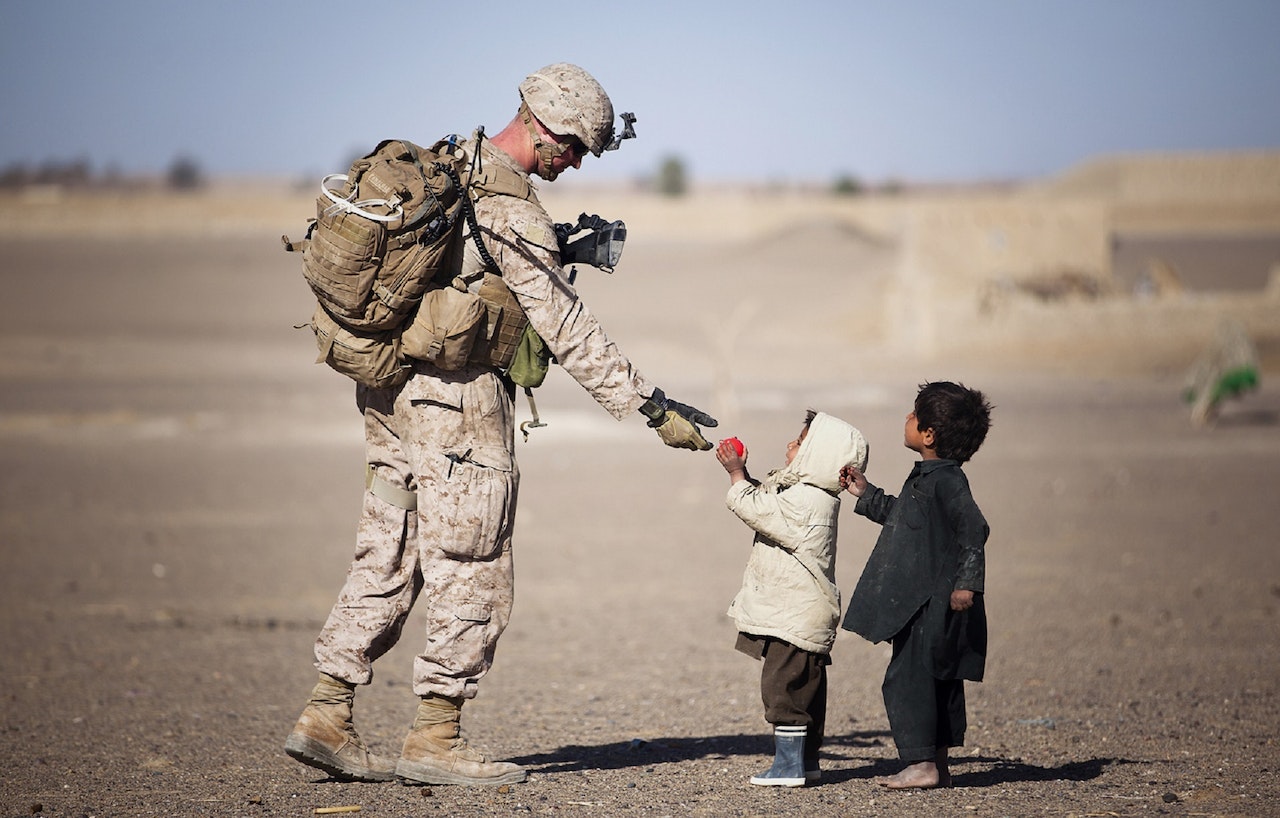
Lioness tells the story of a group of female Army support soldiers who became the first women in American history to be sent into direct ground combat. Without sufficient training but with a commitment to serve as needed, these young women ended up fighting in some of the bloodiest counterinsurgency battles of the Iraq war. Lioness makes public, for the first time, this hidden history.
Told through intimate accounts, journal excerpts, archival footage, as well as interviews with military commanders, the film follows five Lioness women who served together for a year in Iraq. With captivating detail, this probing documentary reveals the unexpected consequences that began by using these Army women to defuse tensions with local civilians, but resulted in their fighting alongside Marine combat units in the streets of Ramadi. Together the women's candid narratives describing their experiences in Iraq and scenes from their lives back home form a portrait of the emotional and psychological effects of war from a female point of view.
Trailer
Click to view Lioness trailer »
Directors' Statement
Five years ago, like all Americans, we watched reports of the invasion of Iraq. We were struck by a recurring footnote that emerged in the press. It wasn’t just young men who were fighting, it was young women too—wives, mothers, sisters, daughters.
It soon became clear to us that a turning point had been reached. The rise of the insurgency had obliterated the notion of a front line and the support units in which women serve were increasingly in the line of fire. As a result, the official U.S. policy banning female soldiers from serving in direct ground combat was being severely tested, if not violated, on a regular basis. This war was changing the face of America’s combat warrior; it was no longer exclusively male.
Intrigued, we wondered who were these women serving in our name? What was it like for them to be on the cutting edge of history in the midst of such a complex unpopular war? While the reality of the changing role of female soldiers was playing itself out on the ground in Iraq, here at home the image of the female soldier stagnated in the public imagination, polarized between Jessica Lynch at one extreme and Lynndie England at the other.
Recognizing this disconnect, our goal as filmmakers was to find a story that would capture the provocative nature of this historic shift. At the same time, the narrative needed to be powerful enough to create a space in the national cultural dialogue for the women’s voices to be heard. After doing some research, we learned about a group of female support soldiers, members of “Team Lioness,” who by any reckoning were breaking new ground and rewriting the rules.
When we first met up with the Lioness women, they had already been back in the U.S. for over a year and it was clear that what they had experienced in Iraq was only part of the story. The rest was unfolding in their lives as they confronted the reality that they were called upon to do the one thing they were told they could never do: engage in direct combat. And they were asked to do so precisely because they were female.
Because neither of us come from military backgrounds, we approached our subjects with an attitude of discovery. We did not assume that we knew what life was like for them and remained open to understanding their world and its logic. As we listened to their combat stories, what emerged was a tale that touches on the universal horror of war but one told from a female perspective.
One of the things we learned during our three years of filming was that the grey zone in which this first group and subsequent Lionesses groups operate can lead to serious consequences. The combat exclusion policy means women are not able to gain access to the same training as their combat arts counterparts who are officially in male combat units. Excluding women from combat also can invite disrespect in that it can lead to women not being treated as full members of the team and create conditions for harassment.
The practice of attaching women on a temporary basis to all male units is a convenient loophole that enables commanders on the ground to reduce violence without violating policy. But because it does not create a paper trail, it can limit a female soldier’s chances of being officially recognized as a combatant. This in turn inhibits her ability to ascend to the highest ranks in the Army and Marines where she can assume a meaningful leadership role and help shape national policy. Proof of having served in combat is also important for determining benefits available to veterans. Without documentation, it is harder for women to get the help they need for combat-related trauma.
It is our hope that LIONESS can contribute to a national discussion of these issues and help us all to remember those who have served and who continue to serve in Iraq and Afghanistan.
Character Bios
TEAM LIONESS
1st Engineer Battalion, 1st Brigade Combat Team, 1st Infantry Division
Camp Junction City, Ar Ramadi, Iraq September 2003-August 2004
Specialist Shannon Morgan, Mechanic
Shannon’s journey from innocent Arkansas “country girl” who never expected to be sent into ground combat, to soldier who experienced the darkest side of war, lends the film dramatic intensity and poignancy as she struggles to come to terms with her inner conflict between faith and duty.
Specialist Rebecca Nava, Supply Clerk
A feisty New Yorker of Puerto Rican heritage from Queens, she has played every role in the military family’s drama—soldier in combat, half of a dual military couple, mother of a baby daughter, wife of a soldier serving in Iraq and female combat vet whose younger sister recently deployed.
Major Kate Pendry Guttormsen, Company Commander
A West Point graduate and the highest ranking female in the battalion, she offers a clearly articulated and strategic understanding of the “grey zone” in which these women operated and the distinction between what they were trained for and what they were called upon to do.
Captain Anastasia Breslow, Signal
Half Chinese, half Russian and thoroughly all-American, she followed in her father’s footsteps and joined the military. Her diary readings document the hidden history of the Lioness program and the personal experiences of what it feels like to be on the cutting edge of change in the military.
Staff Sergeant Ranie Ruthig, Mechanic
A tall mid-western woman, ace mechanic, respected NCO and mother, she was often requested by the Marines for the toughest missions. Her observations of encounters with Iraqi women and children underscore the complicated role Lionesses play in an urban combat environment.
Filmmakers
Meg McLagan
Meg McLagan is a New York-based documentary filmmaker and cultural anthropologist. Her half-hour documentary, Tibet in Exile, which she co-directed, co-produced, and shot, portrays the experience of displacement through the eyes of Tibetan refugee children smuggled into India. The film aired on PBS and was screened at festivals and museums in the U.S. and Europe. Meg also worked as a producer on Paris Is Burning, which won the Grand Jury Prize for Documentary at Sundance and both the New York and Los Angeles Film Critics Circle Award for Best Documentary. She received a BA cum laude from Yale and a PhD from New York University, where she taught anthropology and documentary production in the Program in Culture and Media from 1998 to 2005. Meg has been funded by the National Endowment for the Humanities, Pacific Pioneer Fund, Wenner Gren Foundation, and the Sony Corporation. She also has had fellowships at the MacDowell Colony, the Bunting Institute at Radcliffe College, the School of American Research, and the Content + Intent Documentary Institute at MASS MoCA.
In addition to her film work, Meg is co-editor with Yates McKee of The Visual Cultures of Nongovernmental Politics, forthcoming from Zone Books.
Daria Sommers
Daria Sommers is a director, writer and producer of both documentaries and narrative films. Her work includes the award winning Eastern Spirit Western World, a portrait of Chinese-American artist Diana Kan, which was broadcast nationally by PBS, CBC and the BBC and premiered at the Smithsonian Institution; Duncan’s Shadow, a dramatic short which premiered at the Georgetown Film Festival; and the Audience Award wining half-hour drama Ready to Burn, which received a New Director’s Award from Panavision. Daria began her career at the PBS. Her work has garnered awards from the NEH, NEA and CPB. In addition, Daria served on the Metropolitan Museum of Art’s Program for Art on Film review panel. She has been an artist-in-residence at the MacDowell Colony and at the Content + Intent Documentary Institute at MassMoCa. She recently completed Sawadika American Girl a feature-length screenplay about an Americans living in Bangkok in the shadow of the Vietnam War.
Creative Team
Kirsten Johnson (Cinematography)
Kirsten Johnson shot the film Darfur Now for Warner Independent/Participant Productions in 2007, and Deadline (co-directed with Katy Chevigny), which premiered at Sundance in 2004 and was broadcast on NBC to an audience of 5.5 million people. As a cinematographer, she has worked with directors such as Raoul Peck, Barbara Kopple, Michael Moore, and Kirby Dick. Her cinematography is featured in Farenheit 9/11, Academy Award-nominated Aslyum, Emmy-winning Ladies First, Sundance documentaries American Standoff and Derrida, and She attended the Sundance Writer’s Lab and the Director’s Lab with My Habibi, a narrative feature which she wrote and plans to direct.
Julia Dengel (Cinematography)
Julia Dengel has been a cinematographer since 1993 working on such films as Jennifer Fox’s Learning to Swim, Ross Kauffman’s upcoming TV series War Photographers, Susan Kaplan’s Battle at Oyster Creek, as well as Norman Green’s MTV reality series I’m from Rolling Stone. She has shot in Europe, Africa, and all over the US. She was producer, director, and cinematographer for the PBS documentary Cowboys, Indians, & Lawyers, which aired nationwide in 2007. Her work has been supported by the New York State Council on the Arts, the Colorado Council on the Arts, Independent Television Service, and the Wellspring Foundation.
Stephen Maing (Editor and Co-producer)
Stephen Maing has cut documentaries and programs for PBS, Bravo, History Channel, Discovery Channel, VH-1, MTV, Nickelodeon and for Northern Light Productions in Boston. His most recent editing credits are Comedy Central’s Chappelle Show: The Lost Episodes and the ITVS funded feature, Tie a Yellow Ribbon. Steve’s own short film Little Hearts, was awarded Best of Festival at the New England Film and Video Festival, as well as the Audience Award for Best Short Film at the Slamdance Film Festival. Steve was the recipient of a LEF-Foundation production grant and two Converse-Gallery filmmaker grants for the short films Dance All Night and A Severed Assortment.
Brendon Anderegg (Composer)
Brendon Anderegg studied sound design at the School of the Art Institute of Chicago. He has released solo work on Apestaartje Records, including two albums as one half of the duo Mountains (Sewn, 2006 and Self Titled, 2005); on Psych-o-path Records (Falling Air, 2005); and tracks for Spekk Records and Cubic Fabric Records. Anderegg has toured internationally, performing with artists such as Tony Conrad, Fennesz, Greg Davis, Keith Fullerton Whitman and Tape. Among his work for short films is Thanksgiving by Gregory Misarti (2005), Somewhere In Georgia by Rob-Hatch Miller (2004) and Images From a Dyslexic Mind by James Horn (2004).
Film Credits
Directors: Meg McLagan and Daria Sommers
Producers:
Executive Producers:
In Association With
Impact Partners
Co-Executive Producers
Diana Barrett for The Fledgling Fund
Sarah Johnson Redlich
Cinematography:
Editor: Stephen T. Maing
Composer: Brendon Anderegg
Co-producer: Stephen T. Maing
Consulting producer: Matt Syrett
Supporters
Funding provided by:
- Impact Partners
- The Sundance Institute Documentary Fund
- Chicken & Egg Pictures
- New York State Council on the Arts
- The Fledgling Fund
- Rockefeller Family & Associates
- Open Society Institute
Additional support provided by:
- The MacDowell Colony
- The Content + Intent Documentary Institute Working Films Residency at MASS MoCA
- Working Films
Fiscal Sponsor:
- VARIETY
Get connected and share your story - join our social networks.
Member of the press? You'll find everything you need in our Press Center.
Want to contribute to Lioness outreach efforts?
Become a supporter »
Buy the DVD »